How an SEO Roadmap Generator Turns Data Into a Clear Action Plan
I have lost count of how many times I have sat down with a site audit and felt overwhelmed. The report runs forty pages. It flags broken redirects, thin content, missing meta descriptions, slow load times, and a dozen other issues. The temptation is to fix everything at once, but that rarely works. You spread your energy too thin, you burn out your development team, and you end up with a site that still does not rank for the queries that actually matter.
What I have learned over the years is that the difference between a successful SEO project and a stalled one is prioritisation. You need a clear, staged plan that addresses the highest-impact problems first. That is where a tool like an seo roadmap generator becomes genuinely useful. It takes the raw data from your audits and organises it into a logical sequence of tasks, so you are not guessing what to do next.
Why a static to-do list is not enough
Most SEO tools will give you a list of issues. Ahrefs, SEMrush, and Moz all produce excellent site audit reports. They tell you that your page titles are too short, your images lack alt text, or your internal links are broken. But none of them tell you the order in which you should fix those problems. That is a critical gap.
When I worked on a large ecommerce site a few years ago, the audit from Serpstat showed over two hundred technical issues. The temptation was to start with the quick wins - fixing alt tags and meta descriptions. But the real bottleneck was page speed. The site had massive unoptimised images and bloated JavaScript that was killing the core web vitals scores. If we had spent two weeks on meta descriptions instead of fixing the load time, we would have seen almost no movement in rankings. The roadmap should have put page speed first, and a good seo roadmap generator would have flagged that priority based on the data.
What a good roadmap actually contains
A well-constructed SEO roadmap is more than a list of tasks. It groups work into phases, each with a clear goal. Phase one might be technical fixes that affect crawlability and indexation. Phase two might be content improvements built around a topic cluster model. Phase three might be link building informed by a backlink gap analysis.
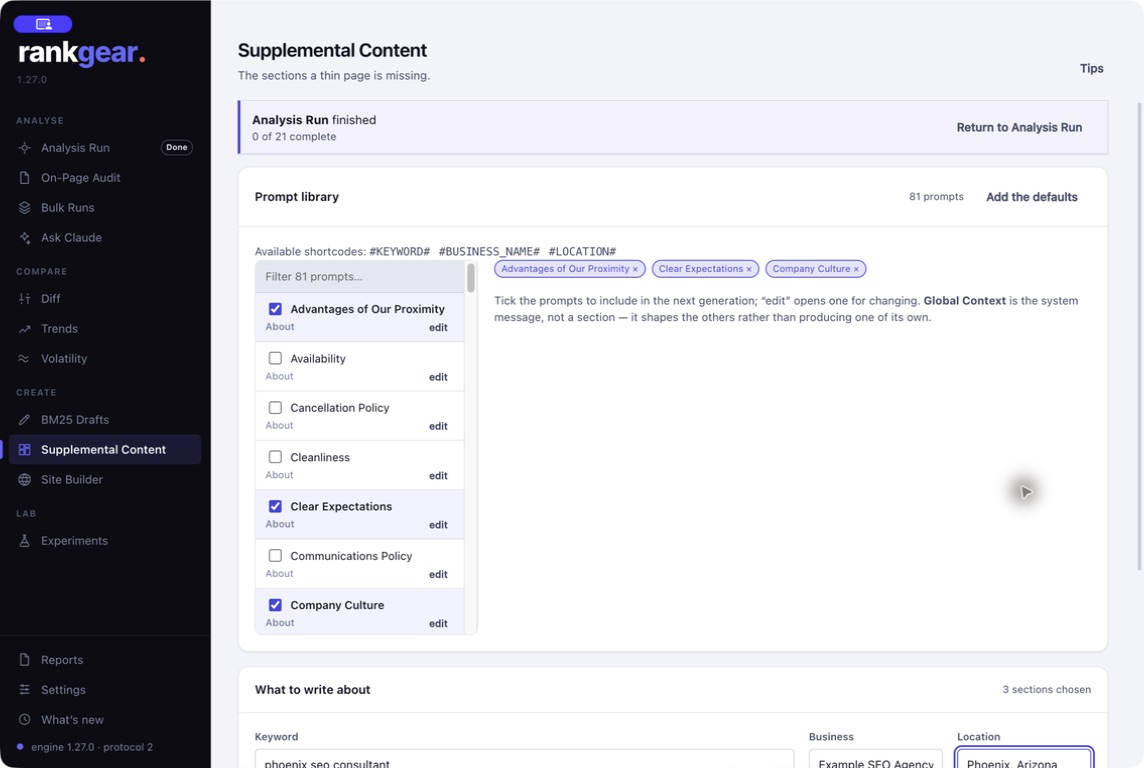
When I use an seo roadmap generator, I expect it to pull data from multiple sources. Google Search Console gives me click-through rates and impressions. Google Analytics shows me which pages actually drive conversions. Keyword tools like SEMrush or Ahrefs give me keyword difficulty scores and SERP features. The generator should combine these signals and tell me, for example, that I should fix the pages with high impressions but low click-through rates before I start writing new blog posts about low-competition terms.
Prioritising by impact, not by ease
One of the hardest lessons I learned early in my career is that easy tasks are not always the right ones. Fixing a missing H1 tag takes thirty seconds. But if that page already ranks on page two for a decent keyword, the fix might move it to page one. That is a high-impact, low-effort task. On the other hand, rewriting an entire pillar page around a new topic cluster model might take a week, but if the current page already has strong backlinks, the rewrite could double your organic traffic.
A roadmap generator that uses entity salience and TF-IDF analysis can help you decide which topics to double down on. It can compare your content against the top-ranking pages and show you exactly which concepts you are missing. That is the kind of insight you simply do not get from a raw list of technical errors.
Content gaps and competitor intelligence
Another area where a structured roadmap shines is content strategy. I often run a content gap analysis between my site and the top competitors. Tools like Ahrefs and Serpstat make this easy. You see which keywords your competitors rank for that you do not. But the question remains: which gaps should you fill first?
If a competitor URL intersection analysis shows that your biggest rival ranks for thirty high-volume terms you have never touched, it might be tempting to write thirty articles. That would be a mistake. A smarter approach is to identify the topics that are most closely related to the queries you already rank for. A topic cluster model built around those core pages will give you more authority than scattering articles across unrelated keywords.
I remember working with a SaaS client that wanted to rank for "project management software." The keyword difficulty score from Moz was 85 out of 100. We were not going to beat the incumbents head-on. Instead, we used a roadmap to target lower-difficulty long-tail queries that fed into the main topic. We built a cluster around "remote team collaboration tools" and "task automation for small teams." Within six months, the site was ranking on page one for several of those terms, and the main page started moving up as the cluster gained authority.
Technical SEO and the role of Page Experience
Google Page Experience is not a single metric. It includes core web vitals, mobile usability, HTTPS security, and intrusive interstitials. A roadmap generator that cannot parse these signals is not very useful. It should be able to tell you whether your LCP (largest contentful paint) is hurting your rankings more than your thin content.
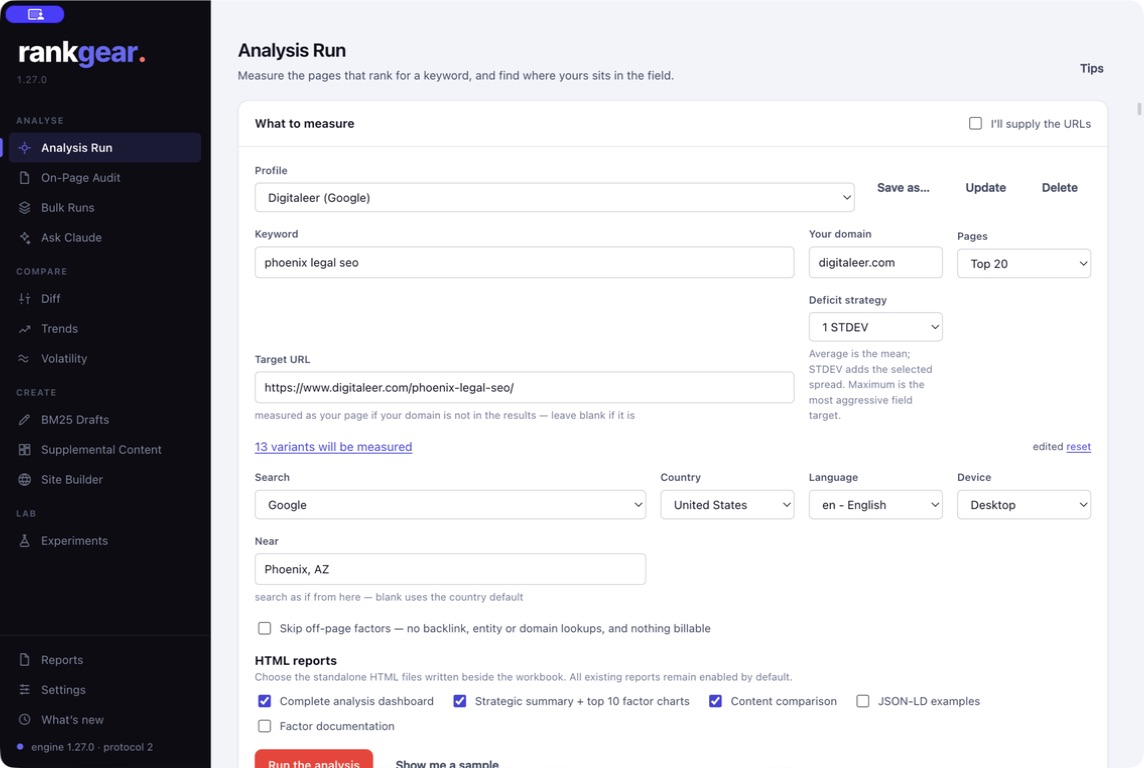
I have seen sites where the SEO team spent three months rewriting blog posts while the page speed was still in the red. They were using Yoast SEO and RankMath to optimise on-page factors, which is fine, but they ignored the technical foundation. The rankings did not budge. A good roadmap would have surfaced the core web vitals issue first, because it affects every page on the site, not just the ones you rewrite.
Integrating tools without drowning in data
One concern I hear from marketers is that they already have too many tools. You have Google Search Console, Google Analytics, SEMrush, Ahrefs, Moz, and Serpstat. Adding another tool feels like more noise. But a roadmap generator is not supposed to replace those tools. It is supposed to synthesise their output into a single plan.
Think of it as the project manager for your SEO campaign. It does not do the crawling or the keyword research itself. It takes the keyword difficulty score from one tool, the backlink gap analysis from another, the SERP features from a third, and it produces a timeline. That is valuable because it removes the guesswork from sequencing.
LSI keywords and natural language signals
Another useful input is LSI keywords. While Google has moved beyond simple LSI matching toward more sophisticated semantic understanding, the concept of related terms still helps you cover a topic thoroughly. A roadmap generator that uses TF-IDF analysis can highlight which related terms your page is missing compared to the top results. That is a concrete action item: add these five terms to your existing article to improve entity salience.
I have done this on several sites and seen the rankings improve within two to three weeks. It is not magic. It is simply giving Google more signals that your page is about the topic.
Trade-offs and judgment calls
No tool can make every decision for you. A roadmap generator is only as good as the data you feed it. If you enter the wrong target keywords or you ignore the competitive landscape, the output will be off. You still need human judgment to interpret the recommendations and adapt them to your specific business context.
For example, if your site has a strong backlink profile but weak content, the roadmap might prioritise content creation. If you have great content but no links, it might prioritise outreach based on a backlink gap analysis. The tool can suggest the sequence, but you have to decide whether you have the budget and the team to execute each phase.
Final thoughts on building your own process
If you are managing SEO for a medium-sized site or larger, I recommend setting up a process that generates a new roadmap every quarter. The search landscape shifts constantly. Keywords that were easy six months ago may now have a high keyword difficulty score. New SERP features may have appeared, like featured snippets or video carousels, that change the way you need to optimise.
Review your roadmap with the same discipline you use for your quarterly business review. Check which tasks from the previous roadmap were completed and which were skipped. Adjust the priorities based on what you learned. Over time, you will develop a sense for which signals matter most for your niche.
In the end, SEO is a long game. The tools change, the algorithms change, but the need for a clear, prioritised plan does not. A roadmap generator is one way to keep yourself honest and focused. Use it alongside your existing tools, apply your own judgment, and you will save a lot of time and frustration.
Ends · THESEOROADMAPGENERATORLIFE